Published on:
10 min read
Pickup Trucks Today: Trends, Features, and Big Changes
Pickup trucks are no longer just work tools with big beds and rough suspensions. Today’s market blends towing capability, off-road tech, luxury interiors, electrification, software features, and rising ownership costs into one fast-changing category. This article breaks down what is actually happening in the truck market right now, from the continued dominance of full-size models like the Ford F-150, Chevrolet Silverado, and Ram 1500 to the growth of midsize and electric pickups such as the Toyota Tacoma Hybrid and Ford F-150 Lightning. You’ll learn which features matter in daily use, how modern safety and towing technologies change the ownership experience, where prices and fuel costs are reshaping buying decisions, and what practical shoppers should watch before signing a deal. If you want a realistic, data-driven view of where pickup trucks are headed and how to choose one intelligently, this guide is built to help.
- •Why pickup trucks still dominate the American vehicle market
- •The biggest design and powertrain trends reshaping modern trucks
- •Features buyers actually use versus features that mostly sell trucks
- •How today’s leading pickup categories compare
- •Costs, ownership realities, and the hidden math behind truck buying
- •What smart buyers should do now: practical tips and key takeaways
Why pickup trucks still dominate the American vehicle market
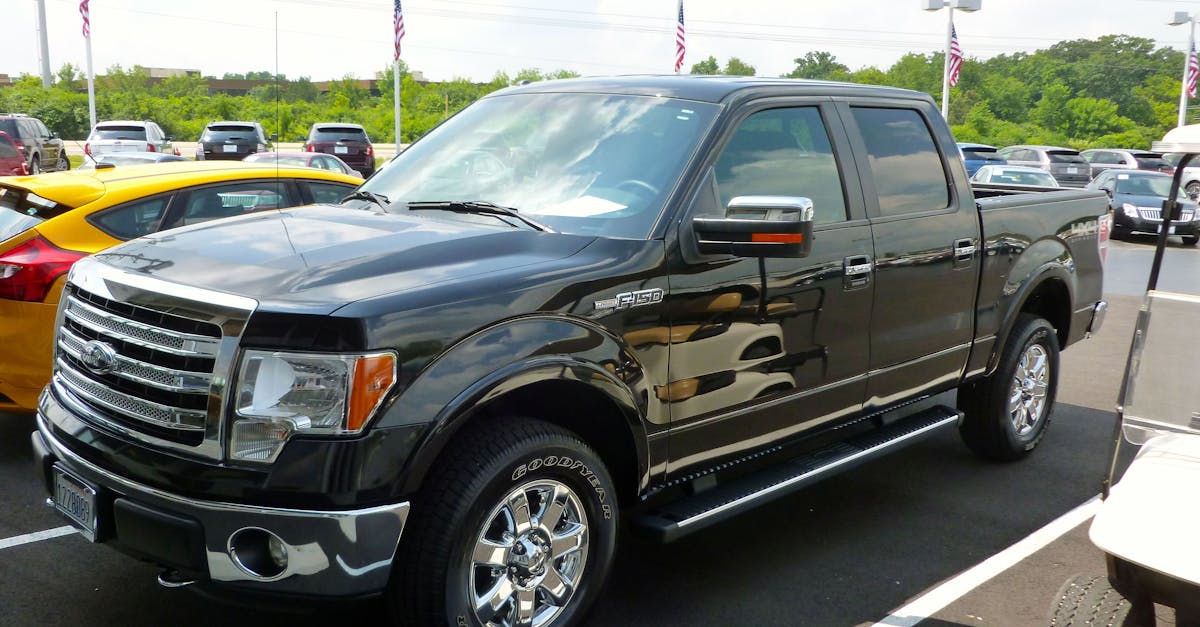
Pickup trucks remain central to the U.S. auto market because they do several jobs at once: family transportation, towing, jobsite hauling, recreation, and status signaling. In 2024, the Ford F-Series again led U.S. vehicle sales with more than 700,000 units, while Chevrolet Silverado and Ram pickup lines remained among the country’s highest-volume vehicles. That matters because few segments can absorb changes in regulation, fuel prices, and consumer taste as quickly as trucks can. Manufacturers know this, which is why they keep pouring money into truck redesigns, trim expansions, and powertrain experiments.
What has changed is who buys them and why. A decade ago, many pickups were bought mainly for work or rural use. Today, a large share are crew-cab models used as everyday family vehicles, especially in suburbs and Sun Belt states. Four full doors, large infotainment screens, quieter cabins, and advanced driver-assistance systems have made trucks acceptable replacements for large SUVs. In some cases, they cost as much as luxury sedans.
That popularity comes with tradeoffs:
- Pros: unmatched versatility, strong resale value, broad model choice, and high towing capacity.
- Cons: rising transaction prices, difficult parking in cities, higher tire and insurance costs, and fuel economy that still lags many crossovers.
The biggest design and powertrain trends reshaping modern trucks
The most important shift in pickup trucks today is not just electrification. It is diversification. Buyers can now choose naturally aspirated V6 engines, turbocharged four-cylinders, twin-turbo V6 options, diesel in some heavy-duty applications, traditional V8s, hybrids, and full EVs. Ford’s F-150 lineup alone has ranged from EcoBoost V6 variants to PowerBoost hybrid and the all-electric Lightning. Toyota pushed the new Tacoma toward smaller turbo engines and hybrid assistance, while Ram has made headlines by moving away from the Hemi V8 in some light-duty applications in favor of new Hurricane inline-six engines.
These changes are driven by emissions pressure, fuel-economy targets, and buyer expectations for torque. Turbocharged and hybrid trucks often deliver strong low-end pulling power, which is more relevant in daily driving than headline horsepower. Real-world efficiency gains vary widely, though. A truck owner towing a 7,000-pound camper will not see the same mpg gains promised in empty-bed commuting.
Several trends are especially notable:
- Downsized engines now outperform older larger engines in many towing and passing scenarios.
- Hybrid systems are being used for torque, idle reduction, and onboard power generation, not just fuel savings.
- EV trucks offer instant torque and quiet operation, but towing range can drop dramatically.
Features buyers actually use versus features that mostly sell trucks
Modern pickups are loaded with features, but not all of them improve ownership equally. The most useful upgrades tend to be the ones that reduce friction in repetitive tasks: integrated trailer brake controllers, surround-view cameras, blind-spot monitoring that accounts for a trailer, power tailgates, bed outlets, spray-in bedliners, and configurable tie-down systems. Ford’s Pro Power Onboard system, for example, has become a real selling point for buyers who run tools, camping gear, or emergency backup equipment directly from the truck. GM’s MultiPro tailgate and Ram’s in-floor storage are also the kind of features owners mention after months of use, not just on dealership lots.
By contrast, some options are easier to market than to justify financially. Massive 22-inch wheels can hurt ride quality and replacement-tire cost. Ultra-premium trim packages often add leather, suede, and cosmetic upgrades that do little for utility. Hands-free driving systems can be impressive on long highway trips, but they are far less relevant if your truck mostly sees local roads, worksites, or towing situations.
Useful features usually share one trait: they save time, lower stress, or increase safety.
- High-value features: 360-degree cameras, adjustable tie-downs, bed lighting, trailer guidance, and all-weather interiors.
- Lower-value for many buyers: oversized wheels, appearance packages, panoramic roofs, and niche off-road hardware that never leaves pavement.
How today’s leading pickup categories compare
The pickup market is now best understood as four separate categories: midsize, full-size light-duty, heavy-duty, and electric pickups. Each serves a different buyer, and confusion happens when shoppers compare them as if they are interchangeable. A midsize truck like the Toyota Tacoma, Chevrolet Colorado, or Ford Ranger fits more easily in garages, tends to cost less, and can still tow enough for small boats or utility trailers. A full-size model like the Ford F-150, Chevrolet Silverado 1500, or Ram 1500 offers more cabin room, stronger towing, and wider trim variety. Heavy-duty trucks such as the F-250, Silverado 2500HD, and Ram 2500 are built for serious payload and trailer work, often at the expense of daily comfort and fuel cost. EV pickups, meanwhile, are carving out a niche among early adopters, fleets, and homeowners who value home charging and onboard power.
The practical differences are easier to see side by side, especially if you are deciding based on towing, maneuverability, and daily use rather than brand loyalty.
| Category | Typical Use Case | Strengths | Tradeoffs | Examples |
|---|---|---|---|---|
| Midsize | Daily driving, light towing, outdoor recreation | Easier parking, lower price, strong off-road options | Less rear-seat room, lower max tow and payload | Toyota Tacoma, Ford Ranger, Chevy Colorado |
| Full-size light-duty | Family use, mixed work, moderate to heavy towing | Best balance of comfort, capability, and trims | Higher price, larger footprint, higher running costs | Ford F-150, Ram 1500, Chevy Silverado 1500 |
| Heavy-duty | Commercial use, large trailers, heavy payloads | Massive towing and payload capability | Rougher ride, expensive maintenance, poor urban usability | Ford F-250, Ram 2500, Silverado 2500HD |
| Electric pickup | Commuting, home charging, mobile power, fleet innovation | Instant torque, quiet ride, low routine maintenance | Towing range loss, charging dependence, high purchase price | Ford F-150 Lightning, Rivian R1T, Tesla Cybertruck |
Costs, ownership realities, and the hidden math behind truck buying
The biggest shock for many truck shoppers is not the monthly payment. It is the total ownership cost after the purchase. New full-size trucks commonly transact well above $50,000, and popular trims can move into the $65,000 to $80,000 range quickly. Insurance is often higher than for midsize SUVs because of vehicle value, repair complexity, and claim severity. Tire replacements can run from around $900 for mainstream sets to well above $1,600 for premium all-terrain packages on larger wheels. Add fuel, registration, accessories, and financing, and a truck can become significantly more expensive than a buyer expected from the base MSRP alone.
Depreciation is more nuanced than many people assume. Trucks often hold value better than sedans, but trim choice matters. Sensibly equipped mainstream trims with desirable cabs and four-wheel drive usually perform better in resale than highly customized or ultra-luxury versions. EV trucks are still harder to predict because the segment is newer and incentives can distort used pricing.
A realistic ownership lens should include:
- Annual miles driven and fuel or charging costs.
- Whether towing is occasional, monthly, or weekly.
- Garage fit, parking difficulty, and urban usability.
- Maintenance expectations, especially for heavy-duty diesels or air-suspension setups.
What smart buyers should do now: practical tips and key takeaways
If you are shopping for a pickup today, the smartest move is to match the truck to the 90 percent use case, not the once-a-year fantasy scenario. Too many buyers shop emotionally, then spend years paying for max towing, giant wheels, or niche off-road gear they rarely use. Start by writing down your real needs: payload, trailer weight, passenger count, bed length, garage clearance, and annual mileage. Then test-drive both the size you want and one size smaller. Many shoppers expecting to buy a full-size model realize a well-equipped midsize truck covers nearly everything they actually do.
Key takeaways for buyers:
- Choose powertrain based on routine driving, not brochure claims alone.
- Prioritize camera systems, towing aids, and bed utility over cosmetic add-ons.
- Price insurance, tires, and fuel before you negotiate the purchase.
- If towing long distance often, test range and stability expectations carefully, especially with EV trucks.
- Buy enough truck for your real workload, but resist paying for bragging rights.
Published on .
Share now!
HM
Harper Monroe
Author
The information on this site is of a general nature only and is not intended to address the specific circumstances of any particular individual or entity. It is not intended or implied to be a substitute for professional advice.