Published on:
10 min read
Solar Panels Explained: Trends, Costs, and Home Benefits
Solar power is no longer a niche upgrade for eco-enthusiasts. It has become a serious home investment shaped by falling equipment costs, improved panel efficiency, utility rate inflation, and federal incentives that can dramatically change the math for homeowners. This article explains how residential solar actually works, what recent market trends mean for buyers, what a typical system costs in 2025, and where the biggest financial and practical benefits come from. You will also find a balanced look at pros and cons, realistic examples of payback periods, and practical guidance for deciding whether solar makes sense for your roof, budget, and long-term plans. If you want a clear, data-informed breakdown without sales jargon, this guide will help you compare options and make smarter next steps.
- •Why solar is having a major moment
- •How home solar panels actually work
- •What solar panels cost in 2025 and what changes the price
- •What homeowners actually gain: savings, resilience, and property value
- •Comparing ownership, loans, and leases before you sign
- •How to tell if your home is a good candidate and what to do next
- •Actionable conclusion: the smartest next step for most homeowners
Why solar is having a major moment
Residential solar has moved from early-adopter territory into the mainstream, and the numbers explain why. According to the U.S. Energy Information Administration, solar has become one of the fastest-growing sources of new electricity generation in the country, while the Solar Energy Industries Association has repeatedly reported record installation years as utility prices continue to rise. For homeowners, that combination matters more than climate messaging alone. When grid electricity gets more expensive every year, producing some of your own power starts to look less like a lifestyle statement and more like a hedge.
Several trends are driving this shift. Panel efficiency has improved, with many modern residential modules now operating in the roughly 20 to 23 percent range, compared with much lower figures common a decade ago. Battery storage has also become more practical, especially in states with outage risk or weaker net metering policies. At the same time, the federal Residential Clean Energy Credit currently allows eligible homeowners to deduct 30 percent of installation costs from federal taxes, which can materially reduce upfront expense.
Still, solar adoption is not uniform. It tends to work best where homes have decent sun exposure, favorable utility rates, and supportive policies. A homeowner in Arizona or California may see a very different payback period than someone in a heavily shaded part of the Pacific Northwest.
That is why solar should be viewed as a local financial decision, not a universal yes or no. The trend is real, but the value comes down to your roof, your bill, your utility, and how long you plan to stay in the home.
How home solar panels actually work
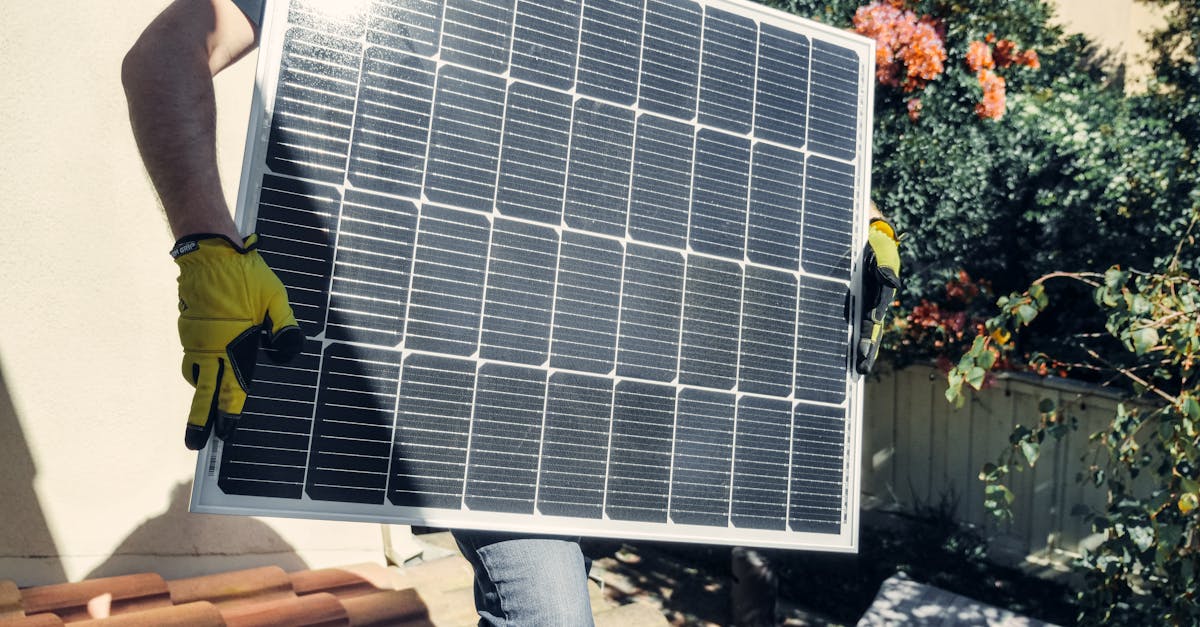
At a basic level, solar panels convert sunlight into electricity using photovoltaic cells, but the home system behind that simple idea has a few moving parts worth understanding. Panels on the roof generate direct current electricity. An inverter then converts that power into alternating current, which your appliances can use. If your system produces more electricity than your home needs at that moment, the excess may be sent to the grid or stored in a battery, depending on your setup and utility rules.
A standard residential installation usually includes panels, mounting hardware, an inverter, electrical wiring, a monitoring platform, and sometimes a battery. Monitoring software is more useful than many buyers realize. It lets you see real-time production, seasonal dips, and whether one panel string is underperforming. That matters because a system can look fine from the street while quietly losing output due to shading, debris, or equipment faults.
For a real-world example, consider a household that uses about 900 kilowatt-hours per month, which is near the range many U.S. homes fall into depending on climate and heating source. In a sunny state, a roughly 6 to 8 kilowatt system might cover most of that demand. In a cloudier region, the same household may need a larger array to achieve similar annual output.
Two system design details matter a lot. First, roof orientation and shading can noticeably affect production. Second, inverter choice matters. String inverters are often cheaper, while microinverters can perform better on complex roofs with partial shade. That difference can influence long-term output more than buyers expect.
What solar panels cost in 2025 and what changes the price
The headline number most homeowners see is price per watt. In 2025, a typical residential solar system in the U.S. often lands somewhere around $2.50 to $4.00 per watt before incentives, depending on location, installer, equipment quality, roof complexity, and whether storage is included. That means a 7-kilowatt system may cost roughly $17,500 to $28,000 before the federal tax credit. After a 30 percent federal credit, that same project could fall to about $12,250 to $19,600, assuming the homeowner qualifies and has enough tax liability to use the credit.
But sticker price alone can be misleading. A low bid may use lower-efficiency panels, a shorter workmanship warranty, or a design that underestimates future electricity needs such as an EV purchase or heat pump upgrade. Conversely, a premium quote might include microinverters, critter guards, upgraded electrical work, and better monitoring. Those features are not glamorous, but they can reduce headaches later.
Here is where the cost usually shifts most:
- System size: More panels increase total cost but can reduce cost per watt.
- Roof design: Steep, multi-level, or older roofs increase labor.
- Panel type: Premium high-efficiency modules cost more.
- Battery storage: Adding a battery can add $8,000 to $18,000 or more depending on usable capacity and backup configuration.
- Local permitting and utility interconnection: Some markets are simply more expensive.
What homeowners actually gain: savings, resilience, and property value
The biggest benefit of solar is still bill reduction, but that undersells the broader value homeowners may get. If your utility rate is high and rising, solar can create predictable long-term savings. For example, a homeowner paying $220 per month for electricity who offsets 75 percent of usage could save around $1,900 to $2,100 per year, depending on seasonal production and utility charges. Over 20 years, even after accounting for some maintenance and inverter replacement risk, that can become a meaningful five-figure benefit.
There are also non-bill advantages that matter more than many buyers realize:
- Energy cost control: Solar can reduce exposure to annual utility hikes.
- Backup potential: With a battery, essential loads such as refrigeration, Wi-Fi, lights, and medical devices can stay on during outages.
- Environmental impact: A typical home solar system can offset several tons of carbon emissions over time, though the exact number depends on local grid mix.
- Potential resale appeal: Some buyers view owned solar as a cost-saving asset.
- Upfront cost can be substantial without financing or incentives.
- Savings depend heavily on local utility policy and sunlight conditions.
- Roof age matters. If replacement is due soon, solar may need to wait.
- Leased systems can complicate a home sale if the buyer does not want to assume the agreement.
Comparing ownership, loans, and leases before you sign
How you pay for solar often matters almost as much as which panels you buy. Cash purchases usually deliver the best long-term return because there is no interest cost and the homeowner keeps the tax credit and full savings. If a $20,000 system drops to $14,000 after the federal credit and saves $1,800 per year, the simple payback may be under eight years in a favorable market. After that, the energy produced is effectively much cheaper than retail utility power.
Solar loans are popular because they avoid the high upfront expense, but buyers should read the details carefully. Dealer fees, interest rates, term length, and whether the quoted payment assumes you will apply the tax credit toward the loan can all change the economics. A low monthly payment can look attractive while hiding a higher total project cost.
Leases and power purchase agreements offer little or no upfront cost, which helps households that cannot use the tax credit or do not want a large capital expense. The tradeoff is that the third-party provider usually keeps the incentives and a larger share of the long-term financial upside.
For quick comparison, use this as a starting point when reviewing proposals.
| Option | Upfront Cost | Who Gets Tax Credit | Long-Term Savings Potential | Best Fit |
|---|---|---|---|---|
| Cash Purchase | High | Homeowner | Highest | Owners with available funds and long-term plans |
| Solar Loan | Low to Moderate | Homeowner | Moderate to High | Owners who want ownership without paying all cash |
| Lease | Low | Provider | Lower | Homeowners prioritizing low upfront cost |
| Power Purchase Agreement | Low | Provider | Lower to Moderate | Homes in markets with strong third-party solar offers |
How to tell if your home is a good candidate and what to do next
Before requesting quotes, do a quick screening. Start with your roof. Asphalt shingle roofs in decent condition are generally straightforward for installers, while old roofs may need replacement first. As a rule of thumb, if your roof has less than 10 years of useful life left, combining reroofing and solar planning can save money and hassle. Next, look at shading. Large trees, chimneys, or adjacent buildings can reduce production enough to change the economics significantly.
Then review your last 12 months of electric bills. This gives installers a realistic usage baseline and helps avoid a system that is either undersized or unnecessarily large. If you plan to buy an electric vehicle, add air conditioning, or install a heat pump, mention that upfront. Future load growth is one of the most common reasons homeowners regret going too small.
When evaluating installers, ask practical questions, not just pricing questions:
- What is the estimated annual production in kilowatt-hours?
- What assumptions are being used for shading and degradation?
- Is the warranty covering equipment, labor, roof penetrations, or all three?
- Who handles permitting, utility interconnection, and post-install support?
- What happens if I need roof work later?
Actionable conclusion: the smartest next step for most homeowners
Solar panels can be an excellent home upgrade, but only when the numbers and the house itself support the investment. The strongest candidates usually have solid sun exposure, relatively high electric bills, a roof with years of life left, and plans to stay in the home long enough to realize the payoff. Costs remain significant, yet incentives, better equipment, and rising utility prices have made solar more financially compelling than it was for many households even five years ago.
If you are seriously considering solar, your next step is not to chase the cheapest ad. Gather a year of electric bills, inspect your roof condition, and request three detailed quotes that include projected annual production, warranty terms, financing assumptions, and total cost after incentives. Then compare those proposals against your real utility spending. Done carefully, solar can lower bills, improve resilience, and increase control over one of your home’s most unpredictable long-term costs.
Published on .
Share now!
HM
Henry Mason
Author
The information on this site is of a general nature only and is not intended to address the specific circumstances of any particular individual or entity. It is not intended or implied to be a substitute for professional advice.