Published on:
10 min read
Japanese Garden Design Trends: A Serene Style Guide
Japanese garden design has moved far beyond the idea of simply adding a stone lantern or a maple tree to the yard. Today’s most compelling gardens blend centuries-old principles such as ma, wabi-sabi, shakkei, and restrained material use with modern needs like low-maintenance planting, smaller urban footprints, and climate-conscious landscaping. This guide explains the most important Japanese garden design trends shaping residential spaces right now, from dry landscape courtyards and moss-inspired texture layers to compact tea-style retreats and contemporary indoor-outdoor transitions. You will learn what these trends actually mean in practice, where homeowners often get them wrong, how to adapt them to different lot sizes and budgets, and which choices create calm rather than clutter. If you want a garden that feels intentional, restorative, and deeply livable, this article offers the practical framework to design one well.
- •Why Japanese garden design feels especially relevant right now
- •The defining trends shaping Japanese-inspired gardens today
- •Materials, plants, and layout choices that actually create serenity
- •Small-space Japanese gardens: what works in urban yards and courtyards
- •Budget, maintenance, and the reality behind the aesthetic
- •Key takeaways: practical tips for designing a Japanese-inspired garden well
- •Conclusion: build calm through restraint, not excess
Why Japanese garden design feels especially relevant right now
Japanese garden design is having a meaningful resurgence, not because it is exotic or decorative, but because it solves a modern problem: visual overload. In a period when many outdoor spaces are stuffed with oversized patios, mixed materials, and trend-driven accessories, Japanese gardens offer the opposite. They rely on restraint, negative space, and carefully edited views. That makes them especially attractive to homeowners who want their yard to feel restorative rather than performative.
One reason this style is trending is the rise of wellness-centered home design. The 2024 Houzz Outdoor Trends data showed continued homeowner investment in outdoor living, especially spaces intended for relaxation and mental reset rather than entertainment alone. Japanese gardens fit that shift naturally. A gravel court, a stone basin, clipped evergreens, and one well-positioned tree can do more for calm than a yard full of features competing for attention.
Another factor is practicality. Traditional Japanese design principles adapt surprisingly well to smaller lots. In dense cities such as Tokyo and Kyoto, compact courtyard gardens have long demonstrated how a few materials can create a strong emotional effect in minimal square footage. That idea now resonates with suburban homeowners dealing with narrower lots and rising landscape installation costs.
What matters most is understanding that Japanese garden design is not a shopping list of lanterns, bridges, and bamboo fences. It is a way of organizing space. Key ideas include asymmetry, seasonal change, borrowed scenery, and the use of texture over color. When applied thoughtfully, those principles produce a garden that feels timeless rather than themed. That difference is why the style continues to grow in popularity among designers and homeowners alike.
The defining trends shaping Japanese-inspired gardens today
The strongest Japanese garden trends today are less about copying historic temple gardens and more about translating core principles for contemporary living. One major trend is the move toward dry landscape composition. Gravel or decomposed granite areas, punctuated by boulders and sculptural pruning, are increasingly popular because they reduce water use and maintenance while still delivering a meditative visual rhythm. In drought-prone regions of the American West, this approach is especially practical.
A second trend is moss-inspired layering, even in climates where true moss is difficult to sustain. Designers often recreate that soft, aged effect with low-growing groundcovers, shaded stone, and weathered finishes. The goal is not perfection but patina. This aligns with wabi-sabi, the Japanese aesthetic that values transience, irregularity, and age.
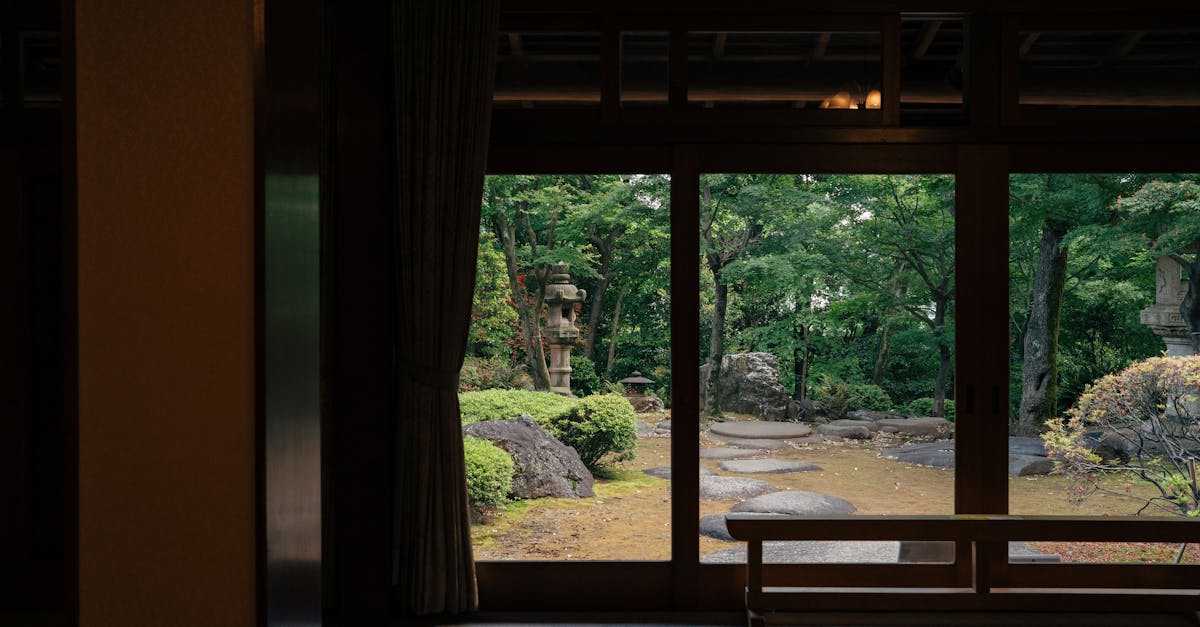
A third trend is stronger indoor-outdoor continuity. Large sliding doors, engawa-style transition decks, and framed garden views are replacing the older idea of the garden as a separate backyard destination. In well-executed projects, the garden is composed as a living artwork visible from inside the home year-round.
These trends have clear benefits and limitations:
- Pros: calm visual structure, better suitability for small spaces, lower water demand in many cases, and timeless appeal that ages well.
- Cons: poor execution can look sparse rather than intentional, authentic materials can be expensive, and some plant palettes do not translate well across climates.
Materials, plants, and layout choices that actually create serenity
A serene Japanese-inspired garden depends more on composition than on any single material, but certain choices consistently work. Natural stone is foundational because it adds permanence and quiet visual weight. Granite, basalt, river rock, and weathered stepping stones all contribute texture without unnecessary color noise. Gravel is equally important, especially in dry gardens, because it creates a clean field that makes plants and stones feel deliberate. In many residential projects, a limited palette of two to four materials is more effective than a long list of decorative finishes.
Planting should be restrained and structural. Japanese maple, black pine, dwarf mondo grass, hakone grass, azalea, camellia, and clumping bamboo are commonly used, but the exact palette should respond to region. For example, in USDA Zones 8 to 10, podocarpus and dwarf yaupon can substitute for plants that struggle with heat or humidity. In colder climates, conifers, ferns, and deciduous shrubs often carry the design more reliably.
Layout matters just as much as plant choice. Good Japanese-style gardens guide the eye through reveal and conceal. A stepping-stone path that turns slightly before opening to a basin or specimen tree creates a stronger emotional response than a straight walkway showing everything at once. This is one place where homeowners often rush.
Useful rules of thumb include:
- Keep focal points limited to one primary and two secondary moments.
- Repeat shapes and textures for cohesion.
- Use empty space as an active design element, not as a gap to be filled.
- Place taller plants to frame views rather than block them.
Small-space Japanese gardens: what works in urban yards and courtyards
One of the most useful current trends is the adaptation of Japanese garden principles for very small spaces. You do not need an acre, a koi pond, or a tea house to create a compelling result. In fact, many of the most memorable Japanese gardens are compact. A 12-by-18-foot side yard, a narrow courtyard, or even a well-designed patio edge can support a deeply calming composition if the design is disciplined.
The biggest advantage of small-space planning is forced simplicity. In a limited footprint, every stone, shrub, and transition has to justify itself. That naturally supports a Japanese design mindset. A practical example is an urban courtyard with one specimen Japanese maple, a stone water basin, a gravel ground plane, and a cedar screen wall. That combination can create more presence than a cluttered garden three times the size.
There are, however, common mistakes:
- Pros of small spaces: lower installation cost, easier maintenance, faster visual impact, and easier control over views and boundaries.
- Cons of small spaces: less room for error, oversized ornaments can quickly look theatrical, and drainage issues become more obvious if not planned early.
Budget, maintenance, and the reality behind the aesthetic
Japanese garden design can look minimal, but minimal does not automatically mean inexpensive. In many cases, the cost comes from craftsmanship, grading, and material quality rather than from a high quantity of elements. A small professionally designed courtyard with quality stone, drainage work, custom fencing, and specimen plants can easily cost more per square foot than a conventional lawn-and-patio layout. In the United States, boutique landscape projects in this style often start around 15,000 dollars for small spaces and can rise far beyond 50,000 dollars when masonry, water features, and specialty pruning are involved.
That said, there are smart ways to control budget without losing the spirit of the design. Prioritize site structure first: paths, gravel fields, drainage, screening, and one anchor tree. Accessories should come last. A simple stone basin can be more convincing than several imported decorative pieces scattered around the yard.
Maintenance is another area where assumptions can be misleading. Dry gardens reduce mowing and irrigation, but they still need care. Gravel must be kept clean, weeds removed, and shrubs pruned with intention. Cloud pruning and niwaki-style shaping are beautiful, yet they require patience and some training.
A balanced view helps:
- Pros: lower long-term water use in many designs, fewer plants to manage, strong year-round structure, and excellent aging potential.
- Cons: installation can be detail-heavy, poor pruning quickly undermines the look, and replacing inappropriate bargain materials often costs more later.
Key takeaways: practical tips for designing a Japanese-inspired garden well
If you want a Japanese-inspired garden that feels calm instead of staged, begin with principles before products. The most successful projects are built around sequencing, proportion, and restraint. That sounds abstract, but it translates into very practical design decisions. Before buying anything, stand inside your home and identify the two or three views that matter most. Those sightlines should drive the layout.
Start with these actionable steps:
- Choose one design mood: dry and sculptural, lush and mossy, or courtyard-minimal. Mixing all three usually weakens the result.
- Limit your materials to a tight palette, ideally stone, gravel, wood, and one wall or fence finish.
- Use one specimen tree as the emotional anchor. Japanese maple works well in mild climates, but pine, serviceberry, or a well-shaped olive can serve the same compositional role in other regions.
- Design for seasonality. Aim for spring texture, summer shade, autumn color, and winter structure.
- Hide utility elements early. Air conditioning units, hose reels, plastic edging, and exposed drains will disrupt the atmosphere instantly.
- If adding water, keep it quiet and simple. A small basin or subtle bamboo spout is usually more effective than a large pond in an average residential yard.
Conclusion: build calm through restraint, not excess
Japanese garden design trends are most useful when they guide better decisions, not when they become another aesthetic checklist. The enduring ideas behind this style are simple: edit ruthlessly, honor natural materials, shape views intentionally, and let space itself do part of the work. Whether you are designing a compact courtyard or reworking a suburban backyard, start with structure, then add plants and details sparingly.
Your next step should be practical. Photograph your yard from the main indoor viewpoints, mark one focal area, and choose a limited material palette before buying anything. Then identify what can be removed as confidently as what should be added. A serene garden rarely comes from accumulation. It comes from clarity. If you approach the project with patience and discipline, even a modest outdoor space can begin to feel quieter, deeper, and far more restorative every day.
Published on .
Share now!
AS
Avery Stevens
Author
The information on this site is of a general nature only and is not intended to address the specific circumstances of any particular individual or entity. It is not intended or implied to be a substitute for professional advice.