Published on:
11 min read
Eyeglasses Trends: What’s New in Style, Fit, and Vision
Eyeglasses have become one of the few everyday accessories that must do three jobs at once: correct vision, feel comfortable for long wear, and look intentional with your personal style. This article breaks down what is actually changing in the eyewear market right now, from softer oversized acetate frames and lightweight titanium builds to digitally measured lens fitting, blue-light skepticism, and the growing demand for low-bridge and inclusive sizing. You’ll learn which trends are worth paying attention to, which are mostly marketing, and how to choose frames and lenses based on face shape, prescription strength, work habits, and budget. Whether you wear glasses all day, switch between contacts and specs, or are shopping for your first serious pair in years, this guide gives you practical, current advice you can use before your next eye exam or eyewear purchase.
- •Why eyeglasses trends matter more now than they did a decade ago
- •The biggest style trends shaping frames right now
- •Fit is finally getting the attention it deserves
- •What’s actually new in lenses, coatings, and vision technology
- •How to choose the right pair based on face shape, lifestyle, and budget
- •Key takeaways: practical tips for buying glasses that look better and work harder
- •Conclusion: choose trends that improve your daily experience
Why eyeglasses trends matter more now than they did a decade ago
Eyeglasses used to be treated mostly as a medical purchase. Today, they sit at the intersection of health, fashion, and daily productivity. That shift matters because more people wear glasses for longer stretches of the day than before. In the U.S., adults spend an average of more than 7 hours daily looking at screens according to widely cited digital media tracking estimates, and that has changed what buyers expect from frames and lenses. People are no longer asking only, “Can I see clearly?” They are also asking, “Will these feel good after eight hours on Zoom, in the car, and at dinner?”
The eyewear market has responded with more style variety, better fit options, and stronger focus on lens customization. You can now find narrow, standard, and wide sizing in many modern collections, plus low-bridge-fit designs that reduce slipping for wearers with higher cheekbones or flatter nose bridges. That is a meaningful improvement over the old one-size-fits-most approach.
There is also a social factor. Glasses are visible in every meeting, photo, and video call. A frame shape can make someone look sharper, more creative, softer, or more authoritative in seconds. That is why eyewear has become a repeat purchase category rather than a once-every-few-years chore.
Why it matters: choosing glasses well can improve comfort, reduce visual fatigue, and elevate your appearance at the same time. The current trend cycle is not just about aesthetics. It reflects a bigger change in how people live, work, and present themselves every day.
The biggest style trends shaping frames right now
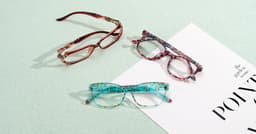
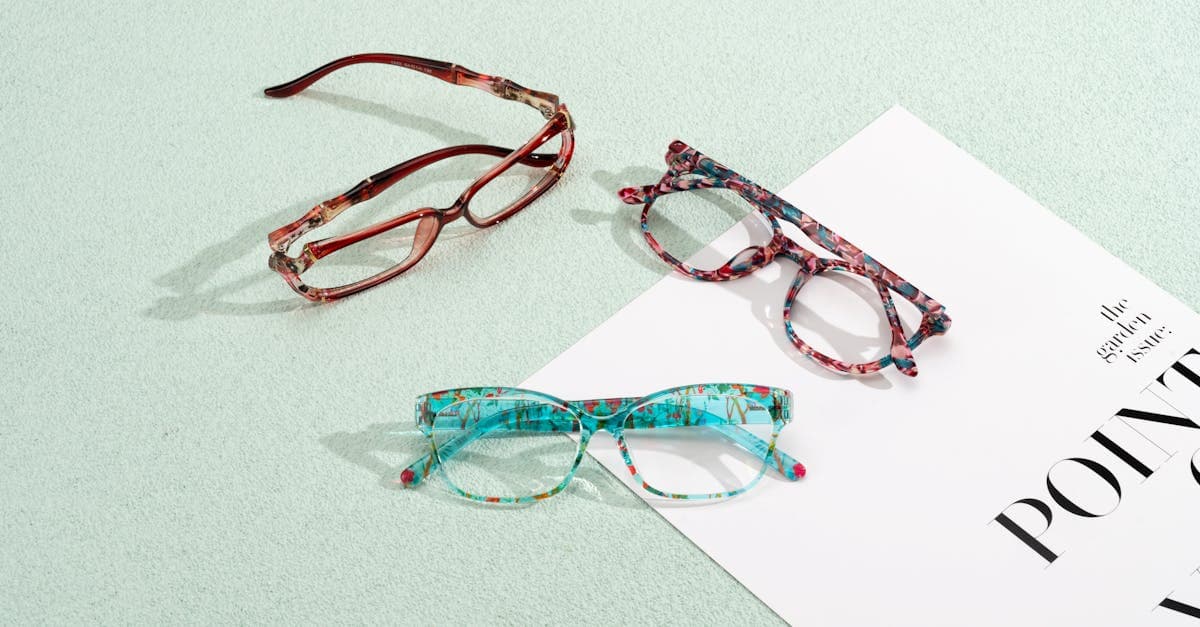
The strongest frame trends right now are less about extreme novelty and more about wearable personality. Oversized acetate remains a leader, especially in translucent champagne, smoke gray, olive, and honey tortoise. These colors feel more modern than basic black while staying versatile enough for daily wear. Slim metal frames are also back, but with cleaner geometry than the ultra-thin styles of the 1990s. Think softened rectangles, rounded squares, and restrained aviators rather than fragile wire rims.
Another important shift is the rise of “quiet statement” eyewear. Instead of loud logos, brands are using thicker temples, sculpted edges, matte finishes, and layered acetate to create visual interest. This gives frames a premium look without making them feel costume-like. Clear and barely there frames still sell well, but many stylists now favor lightly tinted translucent tones because they add definition on the face and photograph better.
A few trend directions stand out:
- Chunky acetate pros: expressive, durable, hides lens thickness better for stronger prescriptions.
- Chunky acetate cons: can feel heavy, may overwhelm smaller faces.
- Thin titanium pros: extremely light, minimal, often more comfortable for all-day wear.
- Thin titanium cons: can make thick lenses more noticeable, usually costs more.
- Retro rounds pros: stylish and intellectual-looking, great for softer facial contrast.
- Retro rounds cons: not ideal for every prescription or professional setting.
Fit is finally getting the attention it deserves
A stylish frame fails fast if the fit is wrong. That is why one of the most important eyewear trends is not visual at all: better sizing and more precise fitting. Consumers are paying closer attention to bridge width, temple length, pantoscopic tilt, and lens height, and optical retailers are responding with more data-driven recommendations. This matters because poor fit causes the complaints people mention most often, including nose slipping, temple pressure, eyelashes brushing lenses, and headaches from misalignment.
The term “low bridge fit” has become much more common, and for good reason. These frames often include adjusted nose pads, a reduced frame curvature, and higher pad placement to keep lenses from sitting on the cheeks. For many Asian, Black, and mixed-heritage wearers, this is not a niche option. It is the difference between glasses that stay on and glasses that need constant pushing up.
A good in-store or virtual fitting should consider:
- Pupillary distance and optical center alignment
- Where the frame rests relative to your eyebrows and cheekbones
- Whether your prescription needs more lens height for progressives
- Weight distribution across the bridge and ears
- Better comfort for all-day wear
- Sharper vision through the correct lens zone
- Less need for frequent adjustments
- Expensive frames that still feel wrong
- Faster fatigue, especially with progressives
- More breakage from constant handling and repositioning
What’s actually new in lenses, coatings, and vision technology
Lens innovation has moved beyond the old basic choice of single vision versus progressive. Today’s meaningful upgrades are about optimization for specific tasks and better measurement accuracy. Freeform digital lenses, for example, are customized with far greater precision than conventional lens surfacing. That can improve peripheral clarity and reduce the “swim” sensation some wearers notice in progressives. For people who spend hours moving between a laptop, phone, and across-the-room conversation, that improvement is not subtle.
Lens material also matters more than many buyers realize. High-index lenses are thinner and lighter for stronger prescriptions, while Trivex and polycarbonate add impact resistance, which can be especially useful for children, commuters, and active adults. Anti-reflective coating remains one of the highest-value upgrades because it reduces glare from headlights, overhead office lights, and screens while making your eyes more visible in photos and video calls.
One area that deserves honest context is blue-light filtering. Major eye care organizations have repeatedly noted that there is limited evidence that blue-light-blocking glasses prevent digital eye strain by themselves. Many people still like them, especially for comfort under certain indoor lighting, but they are not a cure-all.
The upgrades worth considering most often are:
- Anti-reflective coating for nearly everyone
- High-index lenses for moderate to strong prescriptions
- Occupational or office lenses for desk-heavy workdays
- Photochromic lenses for people moving between indoors and outdoors often
How to choose the right pair based on face shape, lifestyle, and budget
The smartest way to buy glasses is to stop asking which frames are “in” and start asking which are right for your face, prescription, and routine. Face shape is useful, but it should not dominate the decision. A rectangular face may suit rounder frames, and a rounder face may benefit from angular lines, but proportion matters more than labels. Frame width should generally align with the widest part of your face, and your eyes should sit near the horizontal center of each lens for the most balanced look.
Lifestyle usually narrows the field faster than style trends do. If you commute, work on a laptop, and attend client meetings, you may need a lightweight pair with excellent anti-reflective coating and a polished shape that works in every setting. If you only wear glasses evenings and weekends, you can afford to be more directional or fashion-forward.
Budget should be handled strategically, not emotionally. A $300 pair worn every day for two years can be better value than a $120 pair that pinches, slips, and ends up in a drawer. On the other hand, paying luxury prices for a logo without getting better fit or lens quality rarely makes sense.
A practical buying filter:
- First, confirm your prescription and lens needs.
- Second, prioritize fit and weight.
- Third, choose a flattering shape and color.
- Fourth, decide where premium upgrades are worth it.
Key takeaways: practical tips for buying glasses that look better and work harder
If you want glasses that feel current without becoming disposable, focus on durable trends and measurable comfort. The most successful buyers usually build around one versatile pair rather than chasing multiple novelty styles. That means selecting a frame with enough personality to feel modern, but enough restraint to work with most outfits, work settings, and lighting conditions.
Use these practical tips before you buy:
- Take a front-facing photo in natural light wearing your top three choices. What looks best in a mirror is not always what looks best in photos or video calls.
- Ask how the frame will handle your prescription. Stronger lenses may look much better in acetate than in ultra-thin metal.
- If you wear progressives, insist on proper fitting measurements. A stylish frame with a shallow lens may limit reading comfort.
- Prioritize anti-reflective coating over trendier add-ons if you have a limited budget.
- If glasses slide constantly, ask specifically for low-bridge-fit options or adjustable nose pads.
- Consider owning one “everyday pair” and one backup. Accidents happen, and replacing glasses urgently is rarely cheap.
- Buying based only on brand name
- Ignoring temple pressure or nose discomfort during try-on
- Choosing a frame too wide because oversized is trending
- Assuming blue-light lenses are essential for everyone
Conclusion: choose trends that improve your daily experience
The newest eyeglasses trends are not just about what looks stylish in a display case. The real progress is happening in smarter fit options, lighter materials, better lens customization, and more intentional design. If you remember only a few things, make them these: prioritize fit before fashion, choose lens upgrades based on your actual routine, and treat glasses as a daily tool as much as an accessory. Before your next purchase, review your prescription, identify where you spend most of your visual time, and try on multiple shapes with comfort as a non-negotiable. A well-chosen pair should sharpen your vision, support long wear, and make you feel more like yourself, not less. That is the trend worth following.
Published on .
Share now!
MC
Mia Collins
Author
The information on this site is of a general nature only and is not intended to address the specific circumstances of any particular individual or entity. It is not intended or implied to be a substitute for professional advice.