Published on:
11 min read
Bathroom Renovation Trends: What’s Worth It in 2026
Bathroom renovations in 2026 are no longer just about chasing spa aesthetics or copying social media mood boards. Homeowners are weighing resale value, energy efficiency, maintenance costs, and daily usability more carefully than they did even a few years ago. This article breaks down which trends are truly worth the investment, from large-format tile and warm metal finishes to smart showers, walk-in wet rooms, and aging-in-place design. It also highlights where homeowners tend to overspend, what features buyers actually notice, and how to balance luxury upgrades with budget discipline. If you are planning a remodel this year, this guide will help you focus on choices that look current, perform well over time, and make sense for your home, lifestyle, and local real estate market.
- •Why bathroom remodels in 2026 are getting more practical
- •The design trends actually holding their value
- •Where smart technology is useful and where it is just expensive
- •Wet rooms, curbless showers, and accessibility-driven design
- •Where to spend, where to save, and which upgrades buyers notice
- •Key takeaways for planning a bathroom renovation in 2026
Why bathroom remodels in 2026 are getting more practical
Bathroom design in 2026 is moving away from pure showroom glamour and toward smarter, more durable decision-making. Homeowners still want beautiful finishes, but they are asking tougher questions: Will this stain easily, does it save water, will it date the room in three years, and does it improve resale? That shift is partly economic. National remodeling data has consistently shown bathrooms among the more value-retentive interior upgrades, but not every trendy choice delivers equal return. In many markets, agents report that buyers respond more strongly to clean layouts, quality tile work, and modern lighting than to ultra-expensive statement tubs or imported designer fittings.
Material and labor costs are also forcing sharper priorities. Since 2020, many renovation categories have seen cumulative cost increases well above general inflation, which means mistakes are more expensive than ever. A vanity choice that looked exciting on Instagram can become a daily annoyance if it lacks storage, and a dramatic black fixture package can feel less appealing once water spots become a constant battle. In other words, trend awareness now has to be paired with long-term practicality.
The most successful 2026 bathroom remodels tend to share four traits: easy maintenance, better lighting, stronger storage, and restrained luxury. Homeowners are splurging where performance is obvious and cutting back where the upgrade is mostly visual theater.
Pros of this more practical approach:
- Better return on investment
- Lower maintenance over time
- Fewer trend-driven regrets
- Some spaces can feel safer than inspiring
- Budget discipline may limit custom design moments
The design trends actually holding their value
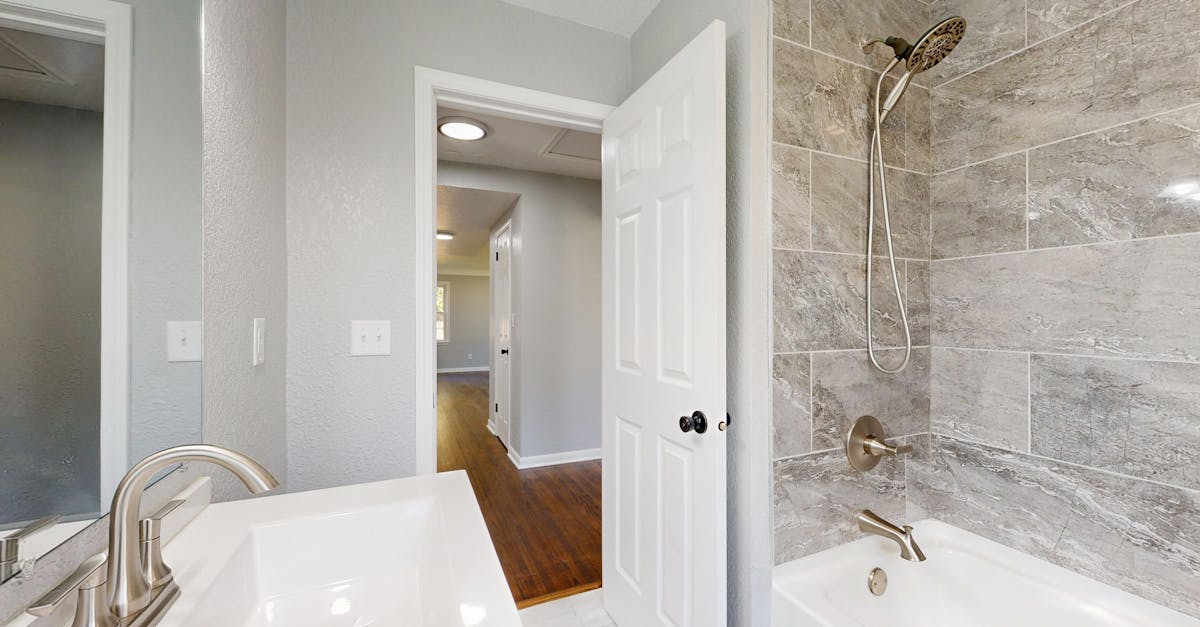
Some bathroom trends in 2026 look fresh because they solve real design problems, not because they are novel. Large-format porcelain tile is a good example. Tiles in 24-by-48-inch and similar formats create fewer grout lines, which makes small bathrooms look calmer and larger while also reducing cleaning. Warm neutrals are replacing stark gray in many remodels, with tones like mushroom, sand, clay, and soft taupe showing up on tile, paint, and oak-toned vanities. These shades feel more residential and less cold, especially under layered lighting.
Floating vanities continue to earn their place because they visually open the floor and make a bathroom easier to clean. They work especially well in 5-by-8-foot bathrooms where every inch matters. Another trend with staying power is mixed lighting: recessed ceiling lights, vertical sconces at eye level, and toe-kick or under-vanity lighting for nighttime use. This combination improves both function and atmosphere, which matters more than one oversized decorative fixture ever will.
Natural texture is also rising, but the durable versions are winning. Instead of real marble everywhere, many homeowners are choosing porcelain slabs and quartz surfaces that mimic stone without the sealing and etching issues.
What is worth it:
- Porcelain that looks like stone or concrete
- Warm wood tones or wood-look finishes
- Backlit mirrors and layered task lighting
- Heavy fluting on every surface
- Bold patterned tile in large quantities
- Matte black everywhere, especially in hard-water areas
Where smart technology is useful and where it is just expensive
Smart bathroom features are maturing in 2026, but they are not equally valuable. The most practical upgrades are the ones that improve comfort, hygiene, and efficiency without adding maintenance headaches. Bidet-integrated toilets and toilet seats are a clear example. They use modest electricity, reduce toilet paper use, and are increasingly expected in higher-end renovations. Heated floors are another upgrade homeowners rarely regret, especially in colder regions. A typical electric radiant floor system in a primary bath can add meaningful comfort without consuming as much energy as people fear when paired with a programmable thermostat.
Digital shower controls are more divisive. They are convenient because users can pre-set water temperature and start the shower before stepping in, but they add cost and complexity. If the household values consistency and accessibility, they can be worthwhile. If the goal is resale in a midrange home, spending that money on better tile installation or a custom vanity often produces more visible value.
Ventilation is one underappreciated technology category that deserves more attention. A quiet, humidity-sensing exhaust fan prevents mold, protects paint, and extends the life of cabinetry. It is not glamorous, but it directly affects durability.
Worth considering:
- Bidet seats or integrated bidet toilets
- Heated flooring in primary baths
- Humidity-sensing exhaust fans
- App-controlled mirrors with limited practical use
- Built-in TVs in mirrors
- Overly proprietary systems that are hard to repair
Wet rooms, curbless showers, and accessibility-driven design
One of the most important bathroom trends in 2026 is the normalization of accessibility-led design. Features once associated only with aging-in-place or medical needs now read as premium and modern. Curbless showers are the clearest example. They create visual continuity, make a bathroom feel larger, and improve usability for children, older adults, and anyone with mobility concerns. In many remodels, this single move transforms both aesthetics and function more than a luxury finish upgrade would.
True wet rooms are also gaining traction, especially in urban homes and compact footprints. By waterproofing more of the room and simplifying shower enclosures, homeowners can make smaller bathrooms feel more open. That said, execution matters. Poor slope planning or weak waterproofing can create expensive problems, so this is not an area to cut corners on labor. In practice, many homeowners benefit more from a partial wet-room approach, such as a curbless shower zone with fixed glass, than from turning the entire room into a splash area.
Accessibility design in 2026 is subtle. Grab bars are being integrated into towel bars. Shower benches are built in using matching slab or tile. Handheld shower wands are now expected rather than clinical.
Benefits of accessibility-led design:
- Better long-term usability
- Stronger appeal to multigenerational households
- Cleaner, more spacious look
- More complex waterproofing and floor prep
- Higher labor cost than a standard shower pan replacement
- Requires a contractor with proven technical experience
Where to spend, where to save, and which upgrades buyers notice
Not all bathroom dollars work equally hard. In 2026, the best-performing remodel budgets prioritize craftsmanship and highly visible functionality. Buyers and appraisers may not care whether a faucet came from a luxury European brand, but they absolutely notice sloppy tile cuts, weak lighting, cheap-feeling drawers, and a shower that looks dated. If your budget is limited, spend first on waterproofing, tile installation, lighting, ventilation, and a vanity with durable storage. Those are the elements that shape how the room feels every day.
Many homeowners overspend on focal-point items with low practical payoff. A freestanding tub in a medium-size primary bath can look beautiful, but if it makes cleaning harder or crowds the shower, it often works against the room. The same is true for highly specialized finishes. Brass can be warm and timeless when chosen carefully, but trendy rose-gold variants or unusual coatings may be harder to match later.
Regional market context matters too. In higher-end neighborhoods, heated floors and frameless glass may be expected. In a starter home, a well-executed midrange bathroom with quartz counters and porcelain tile often makes more sense than premium imported fixtures.
A useful spending order:
- Waterproofing and plumbing reliability
- Layout improvement if the room is awkward
- Lighting and ventilation
- Vanity, storage, and shower materials
- Decorative extras last
- Paying luxury prices for brand name alone
- Choosing trendy finishes that are hard to maintain
- Ignoring storage to preserve a minimalist look
Key takeaways for planning a bathroom renovation in 2026
If you want a bathroom remodel that still feels smart five years from now, the winning strategy in 2026 is balance. Aim for a space that feels current without relying on fragile trends. Start with a clear budget split between infrastructure and aesthetics. A practical rule many designers use is to reserve a meaningful portion for hidden essentials such as waterproofing, electrical upgrades, ventilation, and plumbing corrections before selecting premium finishes. That approach protects the project from the all-too-common scenario where the tile budget survives but the fan, storage, or lighting gets downgraded.
When making selections, ask three questions for every item: Will this be easy to clean, does it improve daily use, and will it still look good if trends shift? If the answer is no to two of those three, it is probably not worth the premium. It also helps to bring samples into the actual room. A warm white tile can read yellow under one LED temperature and elegant under another.
Practical planning tips:
- Request a line-item quote, not just a lump sum
- Confirm who is responsible for waterproofing details in writing
- Test faucet and shower finishes against your local water conditions
- Add at least one storage upgrade you will appreciate every day
- Use dimmable lighting whenever possible
Published on .
Share now!
AW
Amelia West
Author
The information on this site is of a general nature only and is not intended to address the specific circumstances of any particular individual or entity. It is not intended or implied to be a substitute for professional advice.